The Essentials Every AI Policy Needs
Most AI policies fail the same way: they're written to satisfy lawyers, not to guide employees. Ten pages of hedged legalese that no one reads and no one remembers. A policy that changes behavior is short, concrete, and human. Let's build one.
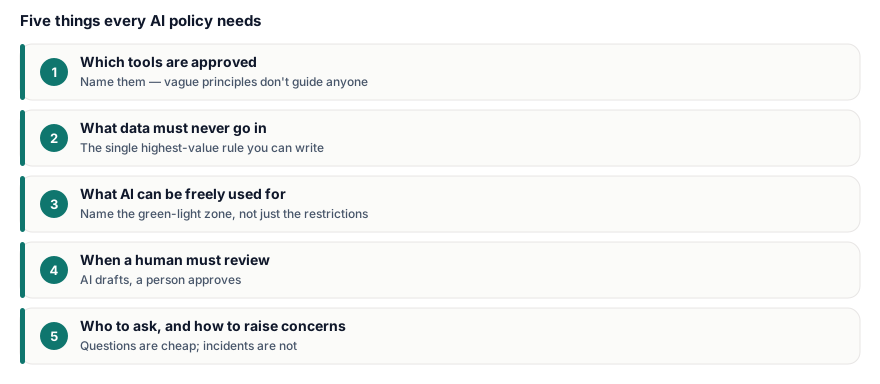
The essentials — cover these and you've covered 90% of the risk:
-
Which tools are approved (and which aren't). Name them. "Use [approved tool]; don't use consumer chatbots for work" beats a vague principle. People need to know what's on the field.
-
What data must never go in. The clearest, most important rule. A concrete never-list: customer/personal data, financials, credentials, confidential info, regulated data. This one rule prevents most incidents.
-
What AI can be freely used for. Just as important as the restrictions — tell people where it's encouraged. Drafting, brainstorming, summarizing your own non-sensitive work. A policy that's all "don't" teaches avoidance; name the green-light zone.
-
When a human must review. Anything customer-facing, financial, or decision-bearing gets human sign-off before it's used. "AI drafts, a person approves."
-
Who to ask, and how to raise concerns. A named person or channel for "is this okay?" Make asking easy and safe — questions are cheap; incidents are not.
The accountability line — state it plainly: whoever uses AI owns the output. "The AI wrote it" is never an excuse. This single sentence puts responsibility where it belongs and shapes careful behavior more than any list of rules.
▶️ Apply it
Draft the five essentials for your organization in bullet points — no prose yet, just the substance. If you can fill in all five specifically (real tool names, your actual never-list), you already have the skeleton of a policy that works. Vague answers show you where you still need to decide.