The Full Cost of AI (Not Just the License)
Every ROI calculation has two sides, and leaders consistently get the cost side wrong — usually by underestimating it. You can't measure return on investment if you've only counted a fraction of the investment. Let's count all of it.
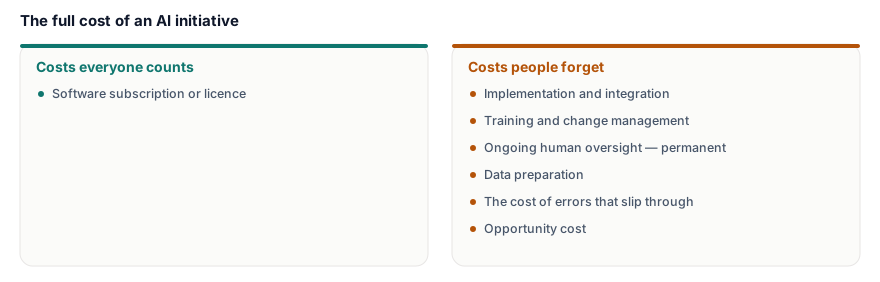
The costs people remember:
- Software/subscription fees — the license, per-seat or usage-based.
The costs people forget (and that often dwarf the license):
- Implementation and integration. Getting the tool into your workflows and systems. Rarely plug-and-play.
- Training and change management. Teaching people to use it well and safely — and the productivity dip while they learn. Real time, real money.
- Ongoing human oversight. AI needs review. The human-in-the-loop time is a permanent operating cost, not a one-off.
- Data preparation. Getting your data into a usable, safe state is often the biggest hidden effort.
- The error cost. When AI gets it wrong and it slips through — the rework, the fix, occasionally the damage. Budget for it; it's not zero.
- Opportunity cost. The time and attention spent on this instead of something else.
Watch usage-based pricing. Many AI tools charge by consumption. Costs that look trivial in a pilot can balloon at scale — model your costs at full projected usage, not pilot volume. A tool that's cheap for one team can be a budget shock across the company.
Why this matters: a tool that saves 100 hours but costs 120 in setup, training, and oversight is a negative return dressed up as a win. Counting the full cost is what separates real ROI from wishful math — and it's the discipline that keeps your AI portfolio honest.
▶️ Apply it
For one AI initiative, list every cost line above — not just the subscription. Add them up. The total is almost always higher than the sticker, and that fuller number is the only honest denominator for any ROI you calculate. Do this before you commit, not after.